Eritrean Afar opposition group accuses Asmara of fuelling Ethiopia's war and warns for refugees in Afar
The Red Sea Afar Movement for Change says Eritrea's government helped organise the alliance now fighting Addis Ababa. It is calling for protection for the tens of thousands of Eritrean refugees living in camps in Ethiopia's Afar region.
By Eyob Hadgu · 30 September 2026
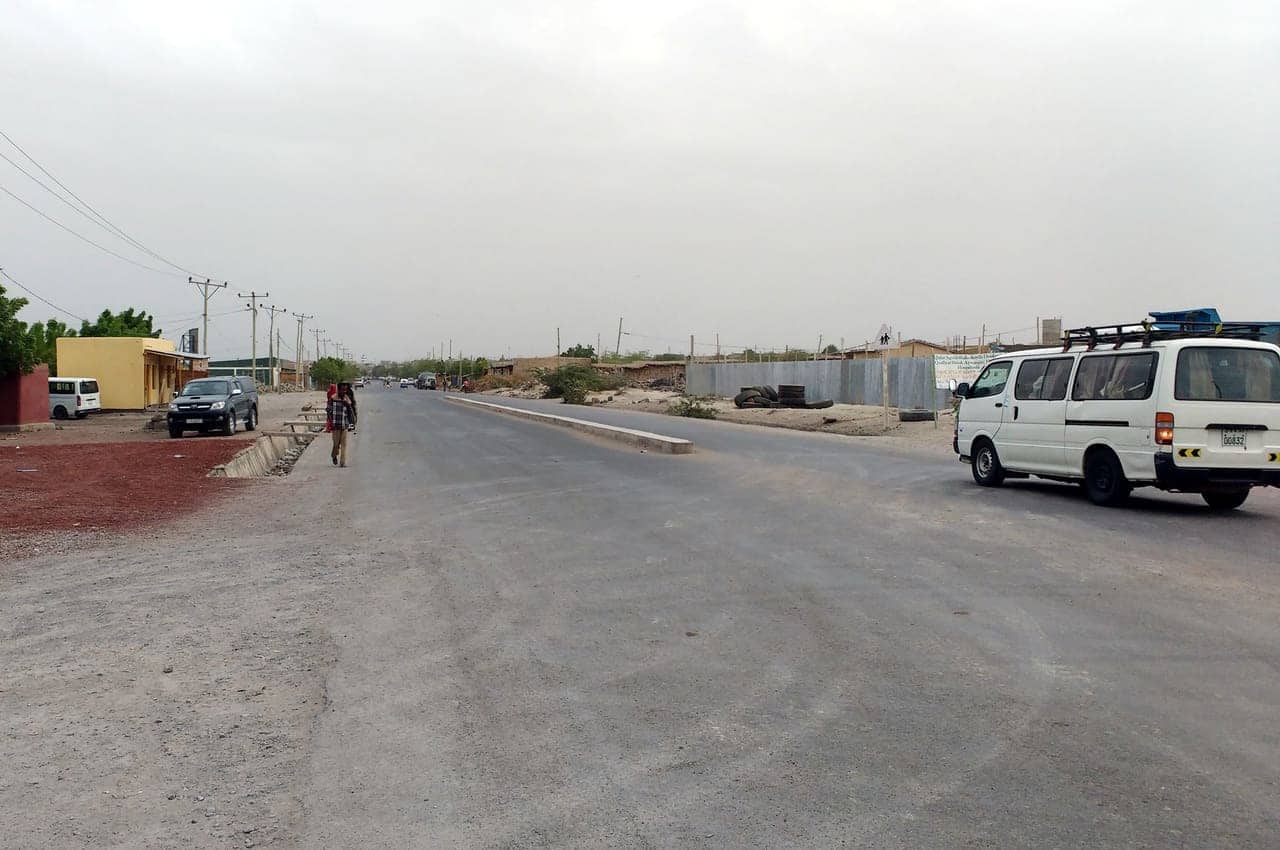
The main road in Asaita, in Ethiopia's Afar region, near one of the region's camps for Eritrean refugees. Photo taken in 2015. Photo: Albert Backer / Wikimedia Commons, CC BY-SA 4.0
An Eritrean Afar opposition group has accused President Isaias Afwerki's government of helping to organise the armed alliance now fighting Ethiopia's federal government. It warned that the war could put Eritrean refugees in Ethiopia's Afar region in danger.
In a statement dated 29 September and published by the Horn of Africa researcher Martin Plaut, the Red Sea Afar Movement for Change (RSAMC) said it had "grave concern" over what it called "the involvement of the Eritrean regime in the unfolding conflict in Ethiopia."
What the group alleges
The RSAMC said it viewed the Eritrean government's role "in establishing and organizing Tsimdo" as a serious development. Tsimdo, it said, has since emerged as a coalition force declaring its intention to fight the Ethiopian government. The group also cited what it called a reported statement by Isaias, made around Eritrea's 34th independence anniversary, that the "Afar region will be a battleground of the coming war." Asmara Post has not been able to independently verify that remark.
The statement warned that "the deployment of Eritrean troops into Afar and support for armed groups risks transforming Afar into another arena of regional confrontation." It called on Eritrea to respect Ethiopia's sovereignty and to "refrain from using Afar communities and territories as arenas for proxy confrontation."
The group also accused the Eritrean government of subjecting Afar communities along Eritrea's Red Sea coast, over more than three decades, to "displacement, political marginalization, restrictions on livelihoods, and severe socioeconomic hardship." It said it would keep working with "democratic Eritrean opposition forces" seeking political change in Eritrea.
These are the claims of an opposition movement. Eritrea has repeatedly denied supporting Ethiopian armed groups. This week, Information Minister Yemane Gebremeskel rejected similar accusations from Ethiopia's army chief, Field Marshal Birhanu Jula, the Associated Press reported. Writing on X, he said Ethiopia's own pursuit of sea access had rattled its neighbours.
Refugees in the path of the fighting
The statement's most concrete appeal concerns Eritrean refugees and asylum seekers in Afar, "whose vulnerability could increase as the conflict expands." The RSAMC called on the Ethiopian government and humanitarian organisations to guarantee their protection and humanitarian access.
According to UNHCR figures cited in a 2026 report by the Mixed Migration Centre, about 60,000 Eritreans live between the Barahle and Aysaita (Asaita) camps in Afar. Barahle was hit during the last war in 2022, and some of its residents were moved to a new camp at Serdo. A 2023 report to the UN Human Rights Council by the Special Rapporteur on Eritrea, Mohamed Abdelsalam Babiker, highlighted the worsening situation of 57,000 Eritrean Afar refugees in Asayita camp who were being denied access to asylum. A study by the International Institute for Environment and Development found that Aysaita camp "showed high levels of food insecurity, poor healthcare, and lack of adequate shelter."
The fighting is now inside Afar. Tigrayan forces captured the town of Erebti on 27 September and were advancing towards Afdeera, and at least 150,000 people have been displaced in the region, according to AFP reporting. Roads in Afar have been blocked, complicating humanitarian access, Addis Standard reported.
The RSAMC also called on the international community to "act with urgency," warning that renewed Eritrean military involvement in Ethiopia would have implications for the security of the Red Sea.
This report draws on the RSAMC statement as published by Martin Plaut, and on reporting and research from the Associated Press, AFP, Addis Standard, the Mixed Migration Centre, the UN Special Rapporteur on Eritrea and the International Institute for Environment and Development.
Get Asmara Post in your inbox every Thursday.
One weekly email. No spam, unsubscribe anytime.